

Signs of Sewer Line Clogs
Plumbing problems are among the most frustrating issues homeowners face. Whether it’s a leaky faucet or a clogged toilet, the repairs are costly and a hassle. Sewer line clogs are another common plumbing problem that can derail a homeowner’s budget and plans.
Sewer line clogs develop in the main line under the home where all the drains meet. When this line clogs, the consequences can be far-reaching. Spotting the signs of sewer line clogs early can help keep repairs simpler and mitigate the damage they can cause. Here are three signs of sewer line clogs to remind homeowners to stay aware.
Noisy Draining or Gurgling Noises
 Drain and sewer lines are engineered to drain away the waste produced at a plumbing fixture quickly. Upon installation, the pipes are clean and free from any blockages. As the pipes are used, scum and sludge start to form on the walls of the pipes. This is the first stage of sewer line clog formation.
As time passes, the sludge on the walls of pipes can cause other debris to stick. As this layer builds, the flow through the pipes is interrupted, causing the drain to become loud. All the turbulence introduced into the effluent causes gurgling noises that should be the first sign of a clogged drain.
If an individual drain starts to suffer, it’s a good bet that the sewer line is in a similar shape. Preventative drain cleaning is recommended to help avoid the second sign of sewer line clogs discussed below.
Sewage Backups
Once the inside of drain and sewer lines gets fouled to the point that foreign debris is getting lodged in the layer of scum, it is likely that the velocity of effluent flowing through the line will decrease, accelerating the formation of a clog.
Soon, the pipe will be completely fouled, and the water flow will cease. Sewage will begin to back up into the lowest portions of the system. Most often, sewage backs up into floor drains and bathtubs on the first floor. If the problem is serious, it can also be backed up in toilets and sinks.
Exposure to sewage is a serious health hazard and shouldn’t be taken lightly. If sewage has backed up into a plumbing fixture, serious problems are evident. Luckily, a quick visit from a plumbing company can remove the clog with drain snaking and clean the pipe with hydrojetting.
Slow Draining
 As mentioned above, drain and sewer lines are built for expediency. Used water shouldn’t stay in basins or toilets for too long before draining away. Slow draining is the hallmark of a sewer line clog.
If sinks, tubs, and toilets are all draining slowly, it is a sure sign that the sewer line is clogged and needs to be cleaned. Professional plumbers can diagnose the problem and perform sewer line cleaning or sewer line repairs.
About Allore’s Plumbing Services LLC
Allore’s Plumbing Services LLC specializes in long-term plumbing solutions. Highly trained technicians with the latest tools and training offer unparalleled service to residential and commercial clients. Call today for a sewer line cleaning service in Stuart, FL.
)
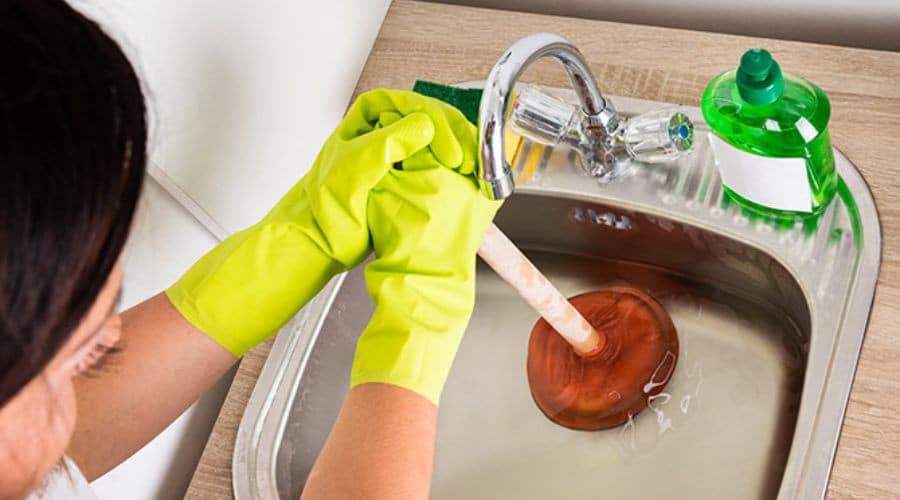

 Homeowners may be tempted to dispose of liquid animal fat, cooking grease, and oils by pouring them down the kitchen sink. Putting cooking grease down the drain will slowly lead to a nasty clog. When animal fat, grease, and oils cool, they become solid and coat the inside of the plumbing.
 )
)
)